




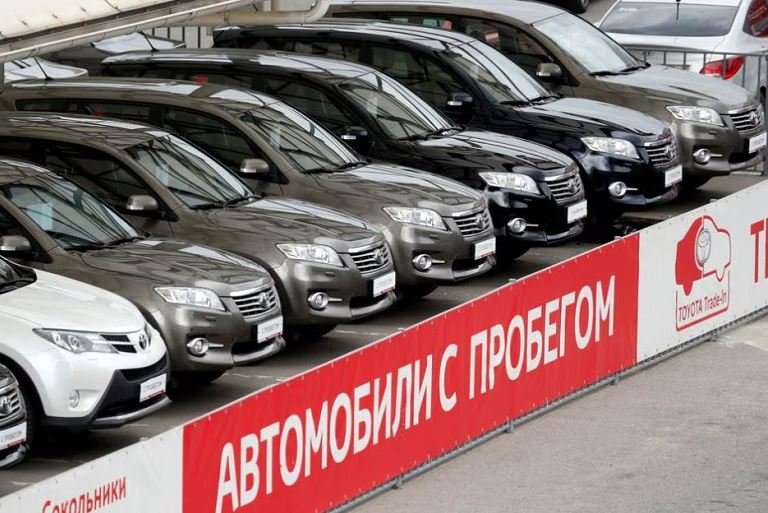
Japan’s move to bar most used-car sales to Russia slammed the brakes on a trade nearing $2 billion annually that had boomed in the shadow of sanctions over Ukraine elsewhere, according to trade data and market participants.
In early August, Japan’s government banned exports of all but subcompact cars to Russia, cutting off a lucrative backchannel in trade in used Toyotas, Hondas and Nissans for a network of brokers and smaller ports, especially Fushiki, an export hub on the Sea of Japan.
While wiping out Russia’s biggest source of used cars, the sanctions have driven down prices for second-hand cars in Japan and left brokers scrambling to send vehicles to other regions, especially right-hand drive markets in New Zealand, Southeast Asia and Africa.
Russia’s demand for second-hand cars from Japan jumped sharply after global automakers, including Toyota, pulled back from operations following Moscow’s invasion of Ukraine.
By last year, with sanctions elsewhere tightening, Russia was buying more than a quarter of Japan’s used-car exports for an average price of almost $8,200. That was more than double the price in 2020, when Russia took about 15% of Japan’s used-car exports.
Those sales had been on track to top $1.9 billion for all of 2023 before Japan imposed its own tougher sanctions, trade data show.
More than half of the 303,000 used cars imported by Russia in the first eight months of the year came from Japan, according to figures from Russian analytical agency Autostat.
That compared to sales of 606,950 new cars of mainly Russian and Chinese brands over the same period, Autostat data showed.
Toyama-based SV Alliance, a two-year-old car export business, had been part of the wartime boom that sent an average of some 6,500 used-cars to Russia every month through July from Japan’s Fushiki. The port is about 800 km (500 miles) from Russia’s Vladivostok, within two day’s sailing for a cargo ship.
“Business is down about 70% and we’ve had to let a couple of people go because there isn’t enough work,” said Olesya Alekseeva, a logistics coordinator at SV Alliance.
Cheaper cars for recyclers
Japan has been a leading used-car exporter for decades. A system of mandatory inspections pushes the cost of maintaining used cars higher for customers in Japan. Financing costs for new car purchases, by contrast, are low.
The result: an export industry that has sent hundreds of thousands of cars on the road from Malaysia to Mongolia and Pakistan to Tanzania that were first purchased in Japan.
Takanori Kikuchi, a director for automotive trade policy at Japan’s Ministry of Economy, Trade and Industry, said the government was “watching to see what kind of an impact” the new sanctions would have.
Japan had originally banned exporting luxury vehicles to Russia in April last year. It added a prohibition on the export of heavy trucks in June.
Under the new sanctions, dealers are still allowed to export smaller cars, such as the Toyota Yaris or the Honda Fit, to Russia.
Element Trading, a used-car dealer in Niigata prefecture that borders Toyama, has seen the share of Russia in its business slide from a peak of above 50% to below 20%, chief executive Wataru Nishiwaki said.
The number of used cars on offer surged more than 20% in August from a year earlier, while average vehicle selling prices posted a 7% drop, preliminary data from auto auction house USS showed.
The price decline was welcomed by some. Battery recycling firm 4R Energy has seen a “significant” tailwind from declining used-car prices, including the Nissan Leaf, said chief executive Yutaka Horie.
Lower prices give the joint venture between Nissan and trading house Sumitomo wider opportunity to secure supplies, he said.